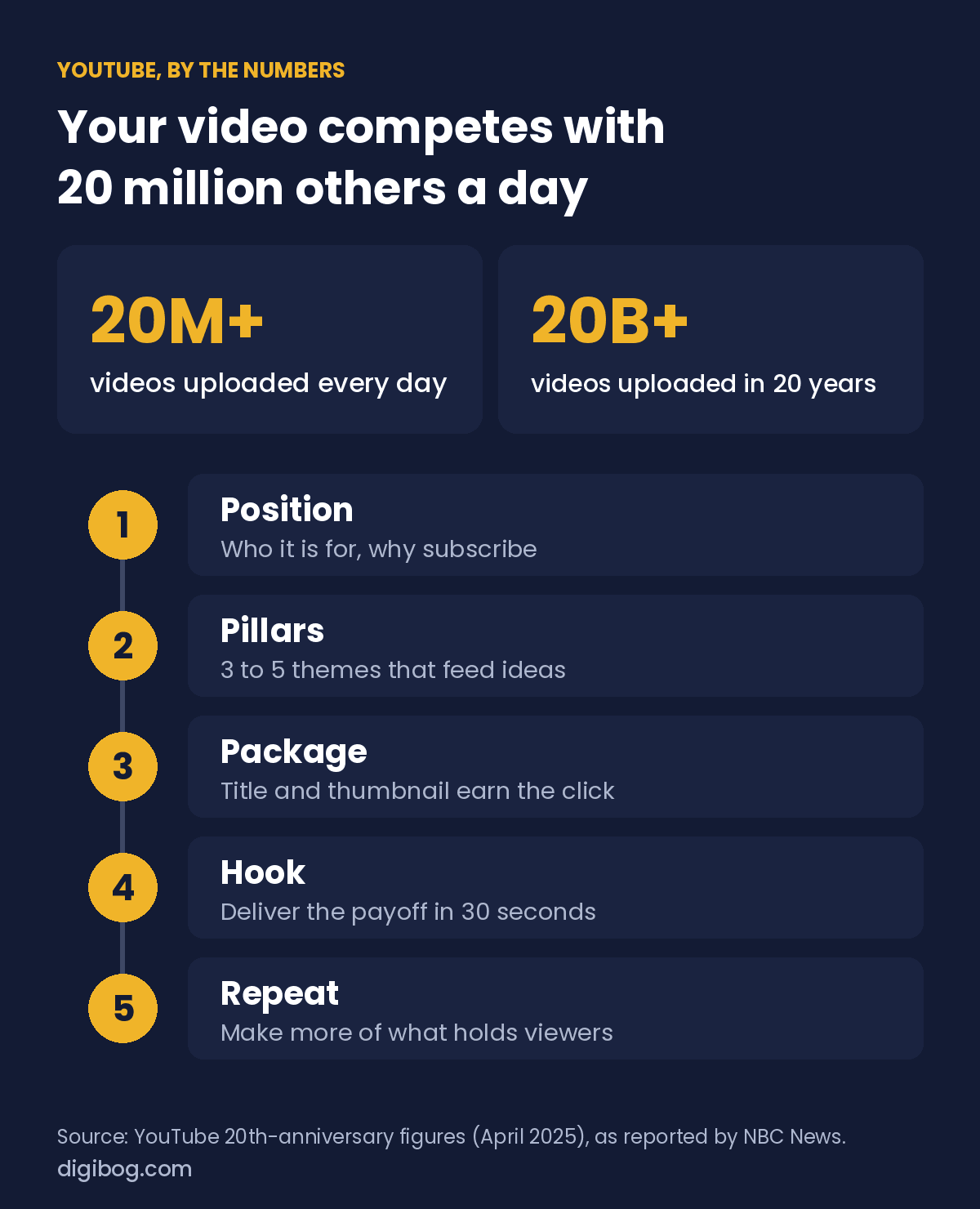
Starting a YouTube channel is easy. To actually grow a YouTube channel takes a system. YouTube says more than 20 million videos are uploaded to it every day, and more than 20 billion since it launched, according to figures it shared for its 20th anniversary and reported by NBC News. A new video is not competing with your last one; it is competing with everything uploaded that same day.
That is why most new creators who want to grow a YouTube channel upload a handful of videos, see low numbers, and quit, not because their content is bad, but because they never had a strategy in the first place. The steps below are that strategy, in order.
Random uploads do not grow channels
Posting whatever you feel like makes it impossible for YouTube, or your audience, to understand what your channel is about. Growth starts with clear positioning: who you are for, what you cover, and why someone should subscribe rather than just watch once.
How to grow a YouTube channel with content pillars
Pick three to five content pillars and let them generate your ideas. Pillars keep your channel focused and give you an endless, organized idea bank instead of last-minute scrambling. When every video clearly belongs to a pillar, both the algorithm and new viewers quickly understand what they will get by subscribing, and that clarity is what compounds into growth.
Titles and thumbnails earn the click
You can make the best video in your niche, but if nobody clicks, nobody watches. Titles and thumbnails are not afterthoughts; they are the front door. Write titles that promise a clear, specific benefit, and design thumbnails that are simple, readable on a phone, and consistent with your brand. Small improvements here often move views more than anything else you do.
Hook viewers in the first 30 seconds
Most viewers decide whether to keep watching within the first half minute. Open with the payoff, not a long intro. Tell people exactly what they will get and why it matters, then deliver it. Strong openings lift your average view duration, and watch time is one of the signals YouTube uses to decide who else sees your video.
How often should you upload
Consistency beats frequency. One solid video a week that you can sustain for a year will grow a channel far more than a daily burst that burns you out in a month. Choose a cadence you can keep through busy weeks, and protect it. Batching your filming makes a steady schedule realistic even with a full plate.
Turn one video into a series
Series keep viewers coming back and make planning easier. When a topic performs well, break it into parts, answer the follow-up questions it raised, and link the videos together. A connected series signals depth to both viewers and the algorithm, and gives new subscribers a clear reason to binge.
Turn the strategy into an actual upload schedule
The YouTube Channel Strategy Planner covers positioning, content pillars, a 50-slot idea bank and an upload schedule — a fillable PDF, so the plan exists somewhere other than your head.
See the plannerInstant download · unlimited downloads · no expiry · one payment, no subscriptionTrack your numbers and double down
Check your analytics monthly and watch click-through rate and average view duration more than raw views. They tell you whether your packaging earns clicks and whether your content keeps people watching. Find your best performers, understand why they worked, and make more like them. With 20 million new videos arriving every day, doubling down on what already works is how a small channel stands out. Growth on YouTube is mostly the discipline of repeating what already resonates.
Plan your growth on purpose
The YouTube Channel Strategy Planner gives you positioning worksheets, a content pillars framework, a 50-slot idea bank, an upload scheduler, SEO formulas, and a monthly growth tracker.
Plan and script each video with the Content Creator Video Planner, repurpose your content with the Social Media Content Calendar, and eventually turn your best series into income with the Online Course Creator Workbook. The official YouTube Creators keeps you current on platform changes.
Optimize for search, not just the feed
YouTube works as a search engine in its own right, which means many of your views can come from people actively looking for answers. Research the phrases your audience types, then work them naturally into your titles, descriptions, and spoken intro. A video that targets a real search can keep earning views for years, long after it leaves the homepage.
Engage with your early community
In the beginning, every comment is gold. Reply to them, ask questions in your videos, and pin a comment that sparks conversation. Early engagement tells YouTube your video is worth showing to more people, and it turns first-time viewers into loyal subscribers who come back for the next upload.
Three kinds of video, three different jobs
Channels stall when every video is trying to do everything at once. Separating the jobs makes each one easier to plan and easier to judge.
| Type | Job | Judge it by | Share of your uploads |
|---|---|---|---|
| Search video | Found by people with a specific question | Views months later, not in week one | About half |
| Browse video | Suggested to people who liked something similar | Click-through and watch time | About a third |
| Audience video | For people who already subscribe | Comments and returning viewers | The rest |
A search video that gets few views in week one is not a failure. It is doing a job measured in months. Judging it by launch-week numbers is how people delete the videos that would have carried the channel.
The reverse mistake is just as common: making only audience videos while the channel is small, and wondering why nobody new arrives.
Frequently asked questions
How often should I upload?
A pace you can hold for a year. Weekly is enough for most channels. Consistency matters more than volume, because it is what makes a viewer decide you are worth subscribing to.
Do titles and thumbnails really matter that much?
Yes, and more than the video for the first few seconds of a viewer’s decision. They are the only part most people ever see. Write the title before you film. If you cannot make it interesting, the topic is the problem.
What if my early videos are bad?
They will be, and it is not a reason to stop. Leave them up or hide them, but keep publishing. Improvement comes from finished videos, not from planning better ones.
Should I niche down?
Early on, yes. A narrow channel is easier to recommend, both by the platform and by humans. You can widen later, once people subscribe for you rather than for the topic.
How long before a channel starts working?
Longer than most people budget for. Plan for a year of consistent uploads before judging, and use search videos as the foundation because they keep earning views long after the upload date.
Play the long game
Almost no channel grows in a straight line. Early videos often find their audience months after you publish them, so judge your progress over quarters, not days. Keep refining your titles, thumbnails, and pillars, stay consistent, and let the compounding do its quiet work.
When you grow a YouTube channel with a real strategy you do not rely on luck; it grows because every video has a job to do.
Related reading: How to Plan 30 Days of Video Content Without Burnout.
About the author. Written by Said Sihame, founder of DigiBog. I make the planners, workbooks and checklists sold on this site, and these articles come out of the same work. Everything here is what I use and test myself — take what fits and leave the rest.